

Box Tree Moth: A Guide
The box tree moth has been steadily establishing itself in Western New York for several years now, and the damage I'm seeing is getting worse every season. As I visit clients' homes across the region, I'm finding more and more boxwoods under serious attack. What started as an isolated problem has become a real threat to one of our most popular landscape plants.
If you've got boxwoods in your garden, you need to know what you're up against. Understanding this pest and acting fast can mean the difference between saving your plants and having to rip them out entirely.

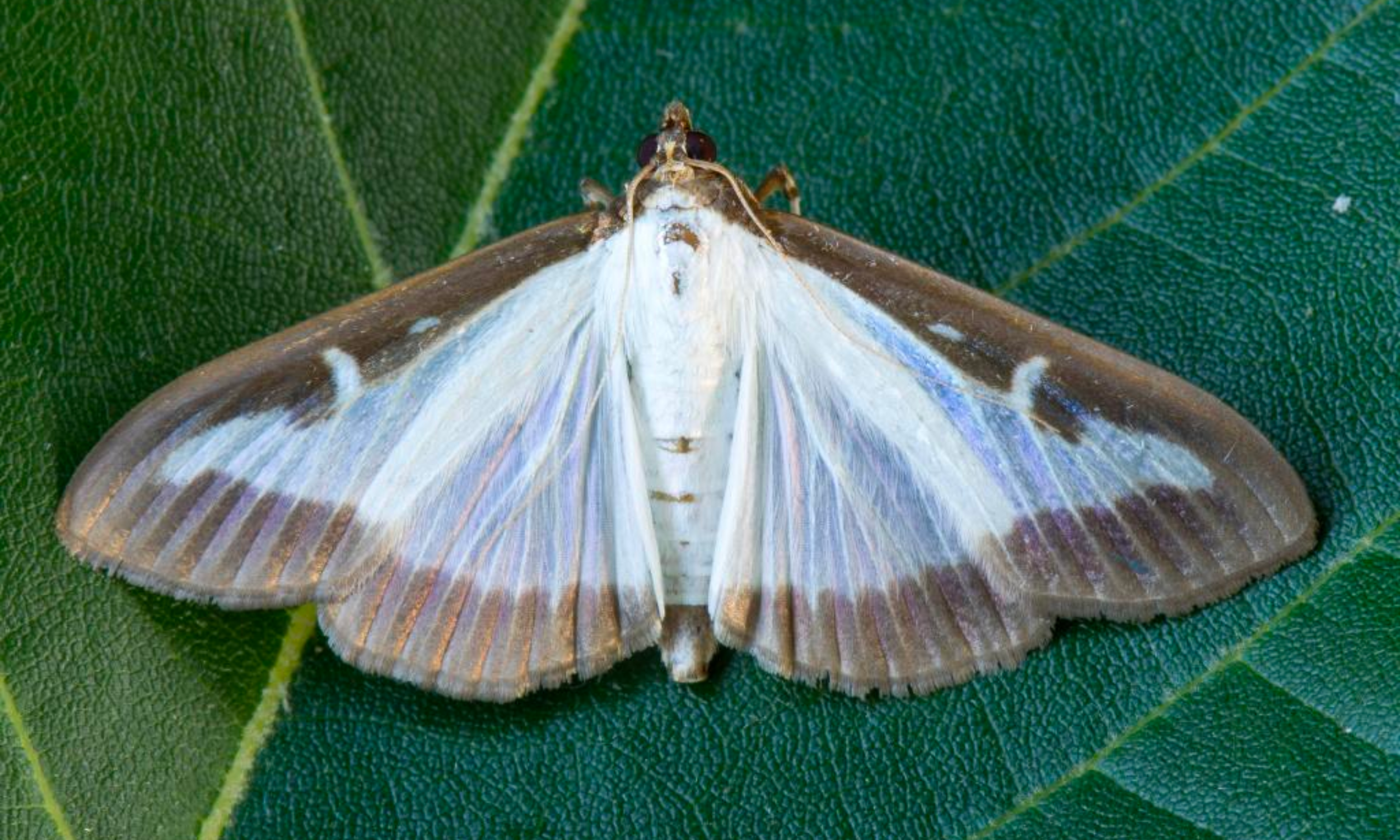
First identified in North America in 2021, the box tree moth is rapidly gaining notoriety as one of the most destructive pests to boxwood plants, a staple in many formal gardens and topiaries. It's a relatively small moth with white wings and a brown border that spans just a little over an inch. A native of East Asia, this invasive species has made its way to Western New York, putting significant stress on local ecosystems.
Gardeners and botanists aren't the only ones taking note; homeowners, parks managers, and nature enthusiasts are finding themselves combatting this invasive pest and wondering how it will affect their horticultural haven.
How did it get here?
The first recorded sighting of the Box Tree Moth in North America was in Toronto in 2021. It's believed that the moth arrived via infested plants imported from East Asia. Since then, it has spread quickly to other parts of Ontario and some northeastern states.
Unfortunately, this isn't uncommon for invasive species - they often hitchhike on plants or through trade and transportation. However, the rapid spread of the box tree moth is a cause for concern as it can have devastating consequences on local plant populations.
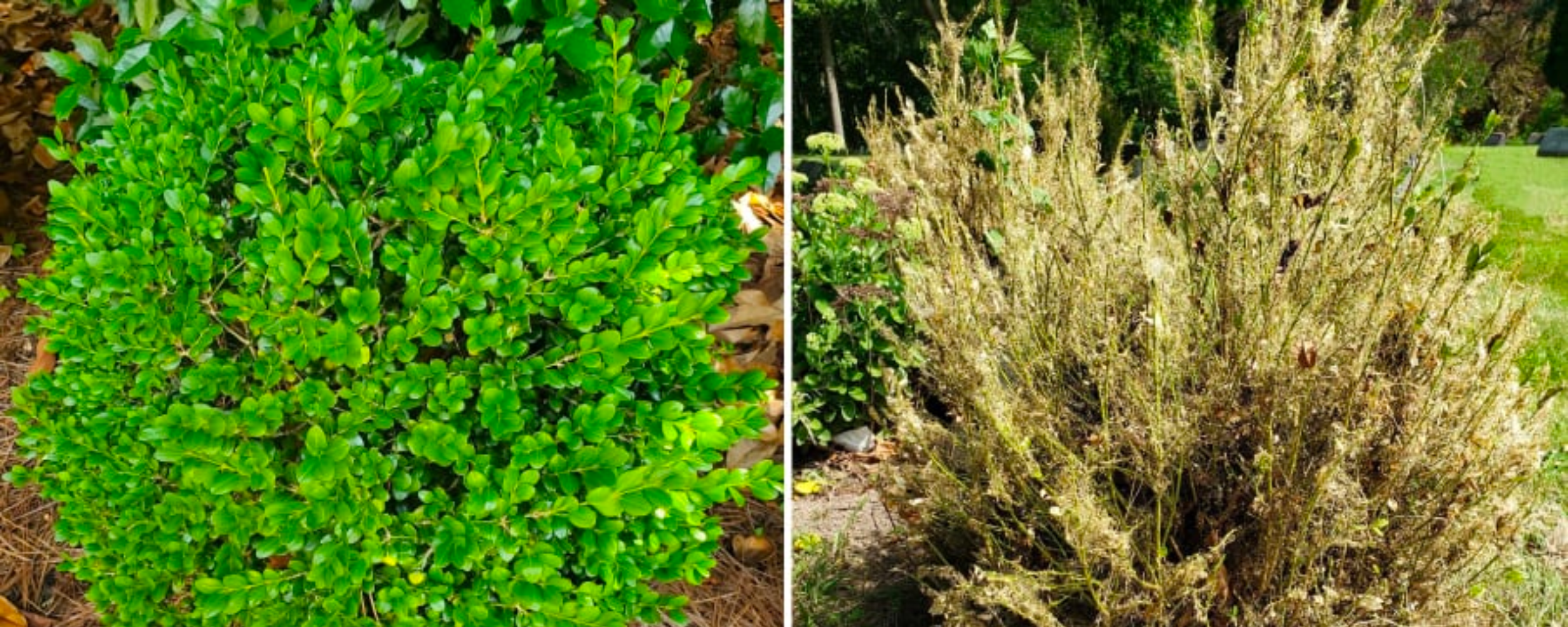
The devastating effects of the box tree moth on a boxwood shrub (Source: Michigan Department of Natural Resources)
Boxwood Defoliation
The box tree moth may be small, but its impact on boxwoods is significant. Females lay their eggs on the leaves, which hatch into larvae that feed on the plant's foliage. The larvae are voracious eaters and can quickly defoliate entire plants, leaving behind only bare branches. This not only affects the plant's aesthetics but also weakens its health, making it more susceptible to other diseases and pests.
The telltale signs are ragged holes and the browning of once-green foliage. The visual impact is significant, turning what were meticulously trimmed, lush green hedges and mazes into unsightly masses of diseased and dying plants.
Effects of the box tree moth on historic gardens around the world are particularly concerning. In Europe, many famous gardens such as the Jardins du Luxembourg in Paris and Hampton Court Palace Gardens have been affected by the invasive species, putting centuries-old boxwood topiaries at risk.
Identifying the Box Tree Moth
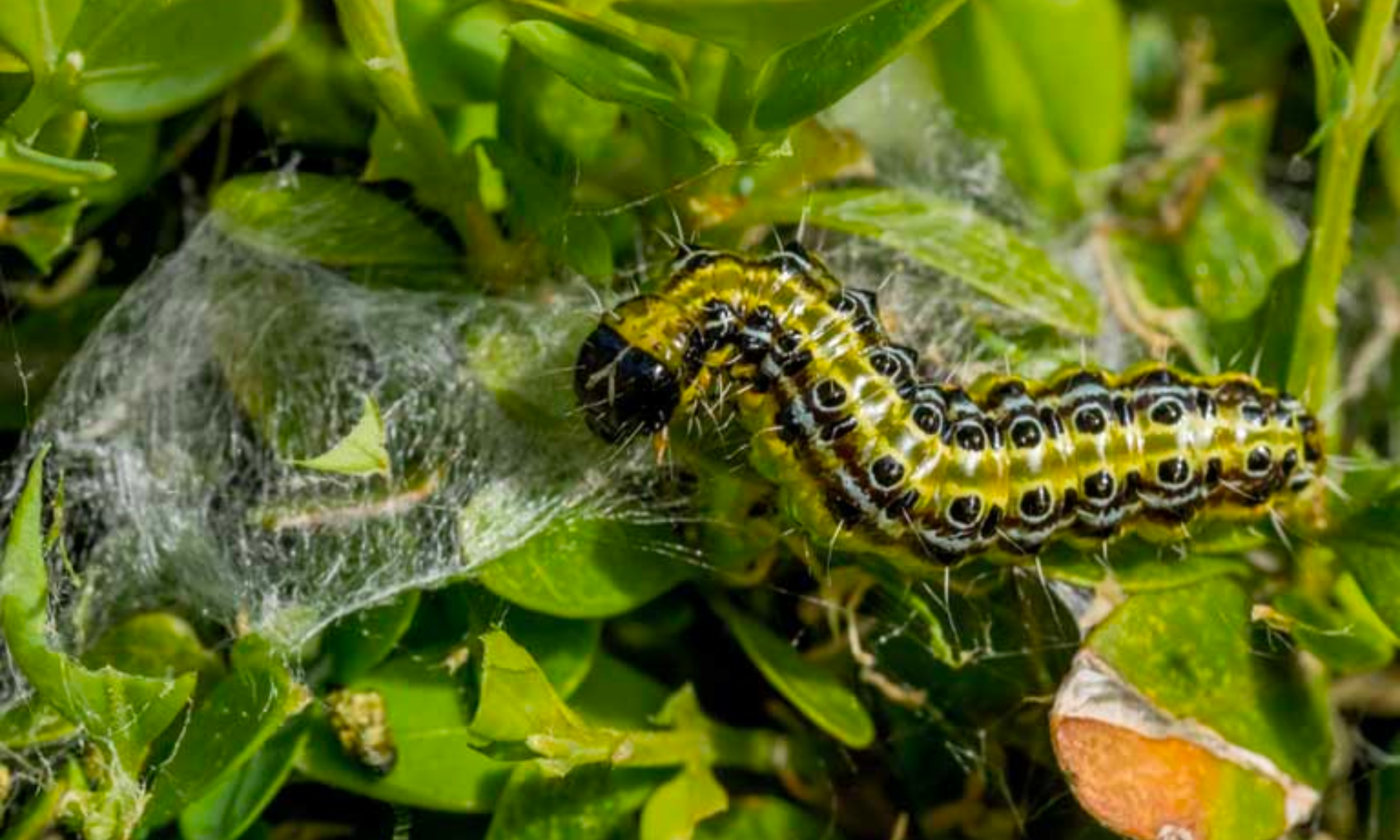
The box tree moth has mottled white wings with a wide brown border. Its larvae are yellow with black stripes, and you can often find them hanging out together in a web on boxwood leaves, especially during the warmest months.
The Life Cycle of the Box Tree Moth
What makes this pest particularly destructive is the fact that there are two egg laying cycles per season. This is very unusual! Double the eggs means double the destruction.
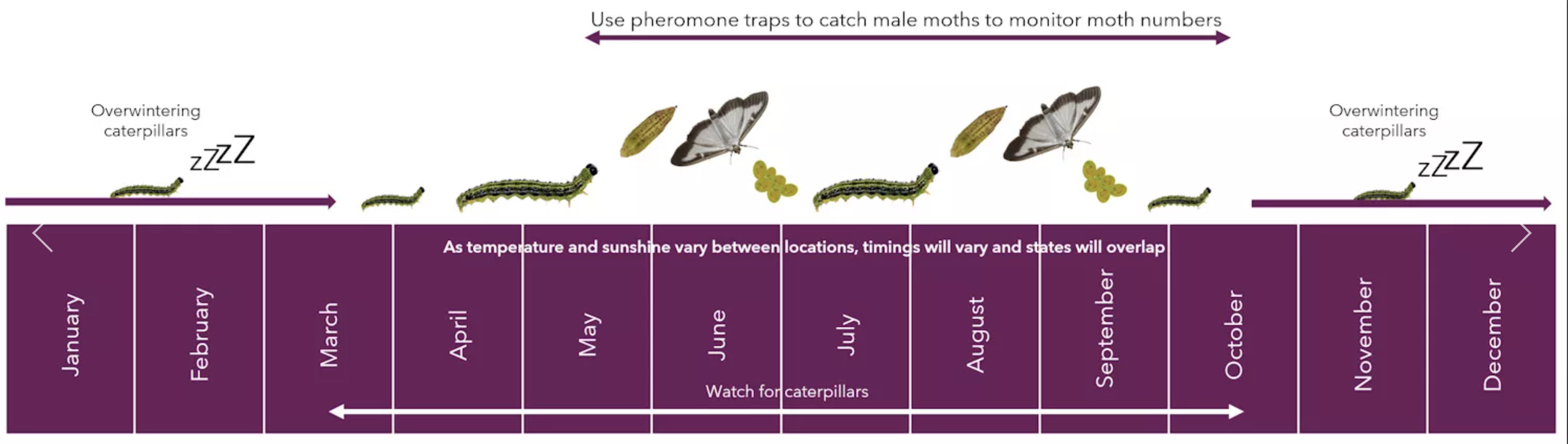
Source: European Boxwood and Topiary Society
Treatment Options
Treatment options for box tree moth are limited since we're still learning about the impact of this invasive insect. The methods below are effective if you catch an infestation early with only minor damage. However, if the entire plant has been severely damaged or completely defoliated, you're probably better off removing and replacing the boxwood entirely.
Bacillus thuringiensis (BT) Treatment: BT is a naturally occurring bacteria that's toxic to caterpillars but safe for humans, pets, and beneficial insects. When box tree moth larvae ingest BT-treated foliage, it disrupts their digestive system and kills them within a few days. BT can be purchased at local garden centers and should be applied monthly during the growing season. Apply BT spray thoroughly to completely douse the plant—this isn't a light misting job. Cover all boxwood surfaces, including the undersides of leaves where larvae often hide. Timing is crucial as BT works best on young larvae, so monitor your plants closely and treat as soon as you spot the first signs of caterpillars.
Mechanical Removal: Hand-picking larvae and destroying egg masses is labor-intensive but effective, especially for small infestations or valuable specimen plants. Check your boxwoods regularly, particularly during warm months when larvae are most active. Look for the distinctive yellow caterpillars with black stripes clustered in webs on the foliage. Remove and destroy any egg masses, larvae, or cocoons you find. This method works best when combined with other treatments and requires consistent monitoring throughout the season.
Final Thoughts
The appearance of the box tree moth is a real challenge for us gardeners. With plenty of boxwoods in my yard, I know firsthand how quickly pests can take over (side-eyeing you, Japanese beetles!). Before adding any boxwoods to my designs, I'll have a serious chat with the homeowner. Since boxwoods can be quite an investment, I'll be careful until we find a solution and get the situation under control.