

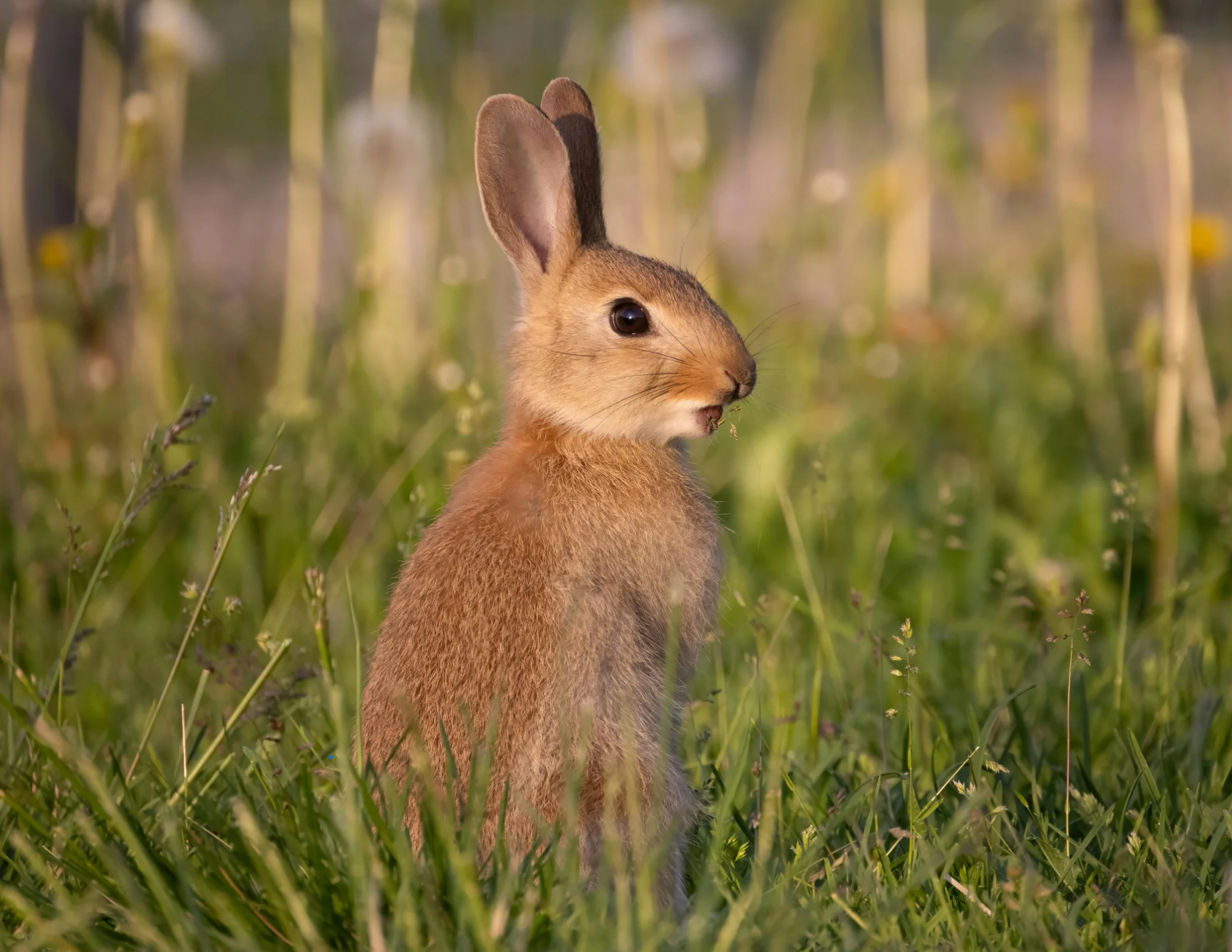
The older I get, the more I sympathize with Elmer Fudd.
You wait through nine months of Western New York winter. You sweep the snow off the crowns of your perennials. You poke through the half-frozen soil looking for the first tender green shoots, and when they come up you check on them every morning like a helicopter parent. And then one day you walk out with your coffee and they're gone. That's all, folks.
Most people don't realize they have a rabbit problem until April, when something starts mowing down their tulip shoots. But by then, the rabbits have already been in your yard all winter, doing damage you probably haven't noticed yet.
When the ground is covered in snow and nothing green is growing, rabbits switch to a woody diet. They strip bark off young trees and shrubs, right at snow-line height, chewing all the way around the trunk in the worst cases. A fruit tree girdled in February won't leaf out in May. They nibble the tips of your dormant shrubs, nipping off next year's flower buds on your lilacs, forsythia, and hydrangeas. They tuck into the base of your burning bush and your young maples and go to town.
You walk out in March once the snow melts and find a dead sapling. That happened in January, when you weren't looking.
Then spring arrives and the menu changes. Tulip shoots are the first casualty — those tender green fingers coming up through the mulch are rabbit candy. Then crocus foliage, early hosta noses, emerging daylily fans, pea shoots and lettuce in the vegetable garden, the fresh growth on any perennial brave enough to break dormancy. They go after tulips so reliably that if you want tulips in Western New York, you basically have to plan for defense before you even plant the bulbs.
The damage is distinctive: clean 45-degree cuts on stems, like someone went through with pruners. Bark stripped in a tidy band around a trunk. Whole rows of new shoots gone overnight.
Rabbits are predictable, though, which means you can plan around them. The catch is that most of the popular defenses are a waste of money.
What doesn't work (or barely works)
Old Wives' Tales. Ivory soap shavings. Milorganite. Human hair. Red pepper flakes. Human pee. Mothballs. The list goes on, and honestly, most of these do work — the real question is whether you're applying them often enough.
Here's the thing. Our springs in WNY (expletives aside) could charitably be described as wet. Whether that wet shows up as rain or, more often, snow, any kind of sensory repellent needs to be reapplied after every precipitation event. Every single one. So if you want to be out there in your (bunny) slippers and a rain slicker at 6am re-sprinkling pepper flakes, by all means, sally forth. For the rest of us with jobs, kids, and a finite relationship with our own patience, we need something sturdier.
A quick note on mothballs specifically: don't. They're illegal to use this way (the label is the law) and genuinely toxic to pets and wildlife. Skip entirely.
Predator urine. Coyote and fox urine are a multi-million dollar industry built on hope. Same problem as the home remedies — it washes off, and if you live near actual coyotes, the rabbits already know coyotes exist and have factored that into their day.
Dogs. A dog that's outside most of the time will genuinely reduce rabbit pressure. A dog that goes out three times a day to pee will not.
What sort of works
Commercial repellents, applied on a schedule. If you want to use a sensory repellent, I recommend a product like Liquid Fence. It smells terrible (to rabbits and briefly to you) and it works — as long as you reapply every two weeks and after every rain.
Plantskydd is my other go-to. It's a granular blood product that looks like coffee grounds, doesn't smell to humans, and lasts noticeably longer than Liquid Fence. (I like to think it's made from the blood of rabbits.) You sprinkle it at the base of your plants. It's also fantastic for flowerpots and container gardens, where it keeps squirrels from digging up your newly planted annuals.
But even Plantskydd isn't foolproof. What you really need is—
What actually works
Physical barriers. This is the only thing I trust completely. Two-foot-tall chicken wire or quarter-inch hardware cloth, with the bottom 4–6 inches bent outward and pinned flat to the ground (or buried) so they can't burrow under. Around individual prize plants, around the whole vegetable bed, around new shrubs in their first year. Ugly? Yes. Effective? Yes.
For young trees and shrubs, plastic spiral tree wraps or hardware cloth cylinders around the trunks — taller than your average snow line, at least 18–24 inches. Install before winter; remove in late spring once tender shoots have hardened.
Leave a few inches of air between the mesh and the bark; a cylinder pressed flush will trap moisture, invite rot, and can girdle the trunk as it grows. Install before winter; remove in late spring once tender shoots have hardened.
(I’m trying to avoid linking to Amazon but if you are short on cash and long on bunnies, they have many economical options. Your local dollar store is another alternative for cheap options- look for mesh wire wastebaskets. Just make sure there are enough holes to let water and sunlight through!)
Plant selection. No plant is rabbit-proof, but some plants get skipped: anything aromatic (lavender, salvia, catmint, Russian sage, alliums, most herbs), anything fuzzy or prickly (lamb's ear, lady's mantle, barberry, juniper), and most ferns. Rabbit candy: tulips, hostas, coneflowers, asters, young woody shoots of almost anything, and basically every vegetable except onions.
If rabbit damage is chronic in your yard, redesigning beds around their less-favored plants is more sustainable than fighting them every spring with a spray bottle.
Habitat reduction. Rabbits need cover within sprinting distance of food. Brush piles, low decks, dense shrubs against the foundation, untended corners — those are the apartments. If you can't remove the cover (and often you can't — it's your neighbor's yew hedge), at least clear it 8–10 feet back from your most vulnerable plantings.
My early-spring routine
Before bud break, I walk the property. Rewrap any tree guards that came loose over winter. Cage anything new that went in last fall — those plants haven't earned their roots yet and rabbits know it. First Plantskydd application of the season goes on the day temperatures stay above 40°F.
Then I wait. By early May, established perennials are large and tough enough that minor browsing isn't catastrophic. I drop the spray schedule to monthly. By June, rabbits have access to acres of weeds, lawn, and clover, and my garden becomes their second-tier menu.
The whole point is getting your plants through that six to eight week window when they're fragile and rabbits are desperate. After that, the pressure drops and you can stop worrying about keeping Bugs Bunny at bay. As for the pies cooling on windowsills with their come-hither steam fingers, you're on your own.
